
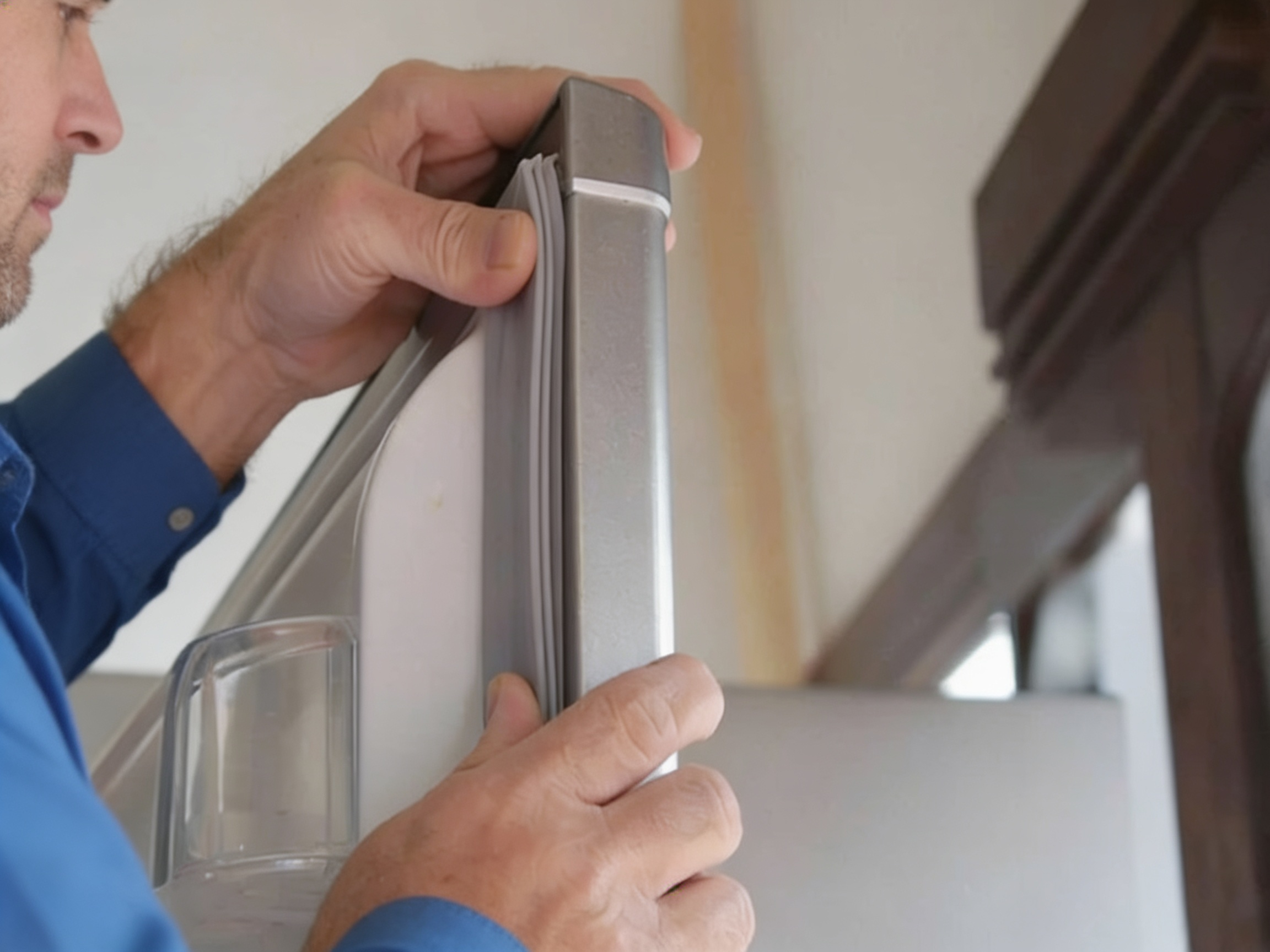
A failing fridge door seal allows cold air to escape and warm, humid air to enter. This can cause condensation, frost, uneven cooling, longer running times and higher energy use. Selective Fridges provides mobile fridge repairs across Perth and can determine whether the seal needs cleaning, adjustment or replacement—or whether another fault is causing the symptoms.
The Short Version
Check your fridge door seal if the door feels loose, condensation appears around the opening or the fridge runs longer than usual. Clean the seal, remove anything obstructing the door and inspect it for gaps, splits or distortion. If it still does not seal evenly, professional assessment is recommended.
What Does a Fridge Door Seal Do?
The flexible seal around the fridge door, sometimes called a gasket, creates a barrier between the cooled cabinet and the surrounding air.
When it seals correctly, the fridge can maintain a stable temperature without working harder than necessary. When it fails, warm air and moisture enter each time the cooling system creates a pressure difference.
Even a small gap can affect performance over time. The fridge may compensate by running longer, while moisture entering the cabinet can contribute to condensation, ice build-up and food-storage problems.
What Are the Signs of a Failing Fridge Door Seal?
Common warning signs include:
- The door no longer closes firmly
- A visible gap appears between the seal and cabinet
- The seal is split, cracked, loose or distorted
- Condensation forms around the door opening
- Frost develops near the edge of the freezer
- Food is not staying consistently cold
- The fridge runs for longer than it previously did
- The exterior around the door feels unusually warm
- Mould, grime or moisture collects in the seal folds
One symptom alone does not confirm that the seal needs replacing. A door-alignment problem, damaged hinge, overloaded shelf or incorrectly positioned container can create similar issues.
Why Is My Fridge Door Not Sealing Properly?
A fridge door may not seal correctly because:
- Food packaging is obstructing the door
- A shelf or drawer is not fully inserted
- The seal is dirty or sticky
- The appliance is not level
- The door is overloaded with heavy items
- The hinges have moved or worn
- The gasket has lost its shape
- The gasket is torn or pulling away
- Ice build-up is preventing proper closure
- The door or cabinet has been damaged
Start with the visible and easily corrected causes. Moving one large container or reseating a drawer may be enough to restore proper closure.
If the door has dropped, does not align with the cabinet or needs to be lifted before it closes, the hinges and alignment should also be inspected.
Can You Clean a Fridge Seal Instead of Replacing It?
Yes, if dirt or food residue is preventing the seal from making even contact.
Use warm water with a small amount of mild detergent and a soft cloth. Gently clean the surface and inside the seal folds, then dry the area thoroughly.
Avoid harsh chemicals, abrasive brushes and sharp tools. These can damage the flexible material.
Cleaning will not repair a split, hardened or permanently distorted seal. If there is physical damage or the gasket continues to pull away from the cabinet, replacement may be necessary.
How Can You Check a Fridge Door Seal?
Complete a careful visual inspection while the appliance is operating normally:
- Remove anything that may obstruct the door.
- Clean and dry the gasket and cabinet contact surface.
- Close the door gently.
- Look along all four sides for uneven gaps.
- Feel for obvious cold-air leakage without pulling at the seal.
- Check for condensation, frost or moisture near the opening.
- Confirm that the door sits evenly against the cabinet.
A sheet of paper can also help identify areas with weak contact. Close the door over the paper and gently pull it. Some resistance should be present.
Repeat the check at several points around the door. The paper test can reveal uneven contact, but it does not identify the underlying cause or prove that every part of the seal is faulty.
Dirty Seal, Damaged Seal or Door-Alignment Problem?
| What you notice | Possible explanation |
|---|---|
| Sticky residue around the gasket | Seal may need cleaning |
| One small area does not make contact | Local distortion or alignment issue |
| Seal is torn, brittle or cracked | Replacement may be required |
| Door sits lower on one side | Hinge or door-alignment issue |
| Door closes after a drawer is repositioned | Internal obstruction |
| Frost forms near the freezer door | Warm air may be entering |
| Entire door feels loose | Seal, hinge or closure problem |
| New seal still leaves a gap | Door or cabinet alignment needs assessment |
The seal should not be replaced automatically without checking the door and hinges. A new gasket may not solve the problem if the door itself is out of alignment.
Can a Bad Door Seal Increase Electricity Use?
Yes. When cold air escapes, the fridge must operate longer to replace it and maintain the selected temperature.
The increase may not be obvious immediately. You may first notice that the compressor runs more frequently, moisture appears inside the cabinet or the fridge struggles during warmer weather.
A damaged seal can also allow repeated frost build-up. When ice restricts airflow, cooling performance may decline further.
Repairing the closure problem can improve temperature stability and reduce unnecessary strain on the appliance.
A Five-Minute Check You Can Try
Before booking a repair:
- Check for food or containers blocking the door.
- Push all shelves and drawers fully into position.
- Clean the gasket with mild soapy water.
- Dry the seal and cabinet edge.
- Inspect the gasket for splits, cracks or loose sections.
- Check whether the door sits evenly.
- Test several sections with a sheet of paper.
- Look for condensation or frost around the opening.
Do not attempt to force a distorted door into position. Avoid loosening hinges unless you understand the model’s adjustment procedure, as the door may be heavy and can move unexpectedly.
Technician’s Tip
Do not assume the seal is faulty simply because the door opens easily.
Some modern fridges have different door-closing characteristics, particularly after the door has recently been opened. What matters is whether the gasket makes consistent contact around the cabinet and whether the fridge maintains the correct temperature.
Inspect the entire seal, not only the section that first caught your attention.
Inside the Workshop
When Selective Fridges investigates a suspected door-seal problem, the technician checks how the door, gasket, hinges and cabinet work together.
The inspection may include checking door alignment, hinge movement, gasket condition, closure pressure and cabinet temperature. The technician also looks for signs that warm air has been entering, such as localised condensation or frost.
This broader assessment helps avoid replacing a seal when the real cause is a dropped door, damaged hinge or internal obstruction.
A Common Repair We See
A common service call begins with a customer noticing that the fridge runs constantly or that moisture is collecting inside.
The gasket may appear damaged at first, but closer inspection sometimes reveals that a heavy door shelf has affected alignment or a crisper drawer is preventing complete closure.
In other cases, the seal has hardened, split or lost its shape and can no longer form an even barrier. The correct repair depends on what is actually preventing the door from sealing.
What We Found This Week
Door-seal faults often develop gradually. A household may become accustomed to pushing the door closed firmly without realising the fridge is no longer closing normally.
A useful clue is a change in behaviour: the door needs an extra push, condensation has started appearing or the compressor runs for longer than it did previously.
These small changes can identify a closure problem before it leads to significant frost or food-temperature issues.
Before You Call for a Repair
Make a note of:
- The fridge make and model
- Which door is affected
- Where the visible gap appears
- Whether the seal is torn or distorted
- Whether the door has dropped or moved
- Where condensation or frost develops
- Whether the fridge is cooling correctly
- Whether the appliance was recently moved
If possible, take a clear photograph of the full door and the affected part of the gasket. Model information is important because fridge seals are not universal and must match the appliance.
Should You Replace the Seal or Repair the Door?
A seal replacement may be appropriate when the gasket is torn, brittle, permanently distorted or no longer stays attached correctly.
Door or hinge repair may be required when the gasket is in reasonable condition but the door does not sit squarely against the cabinet. Sometimes both issues need attention.
| Seal replacement may be suitable | Door assessment may be needed |
|---|---|
| Gasket is split or cracked | Door sits lower on one side |
| Material has hardened | Hinges feel loose or worn |
| Seal has permanent gaps | Door needs lifting to close |
| Gasket pulls away repeatedly | New seal does not sit evenly |
| Cleaning makes no difference | Cabinet or door appears damaged |
A technician can confirm which repair is likely to restore proper closure before parts are ordered.
Mobile Fridge Repairs Across Perth
If your fridge door seal is not closing properly, Selective Fridges can inspect the appliance at your home.
The mobile team services refrigerators throughout the Perth metropolitan area. Where suitable parts are available, the technician can explain whether the seal, hinges or door alignment requires attention.
Contact Selective Fridges to arrange an assessment before escaping cold air contributes to food spoilage, frost build-up or unnecessary energy use.
Frequently Asked Questions
How do I know if my fridge door seal needs replacing?
Look for splits, cracks, hardened sections, permanent gaps or areas that no longer contact the cabinet. Cleaning may help if residue is the problem, but physical damage usually requires further assessment.
Can I test a fridge seal with a sheet of paper?
Yes. Close the door over a sheet of paper and gently pull it. Weak resistance in one area may indicate uneven contact, although the test cannot identify whether the cause is the gasket, hinge or door alignment.
Can a faulty fridge seal cause frost?
Yes. A faulty seal can allow warm, humid air into the cabinet. The moisture may freeze and create frost near the door or within the freezer.
Why is my new fridge seal still leaving a gap?
The seal may not be fitted correctly, or the door, hinges or cabinet may be out of alignment. The replacement gasket must also be the correct part for the fridge model.
Is fridge door seal replacement worth it?
It is often worthwhile when the fridge is otherwise operating well and the seal is the main fault. The appliance’s age, condition, door alignment and availability of the correct replacement part should also be considered.