
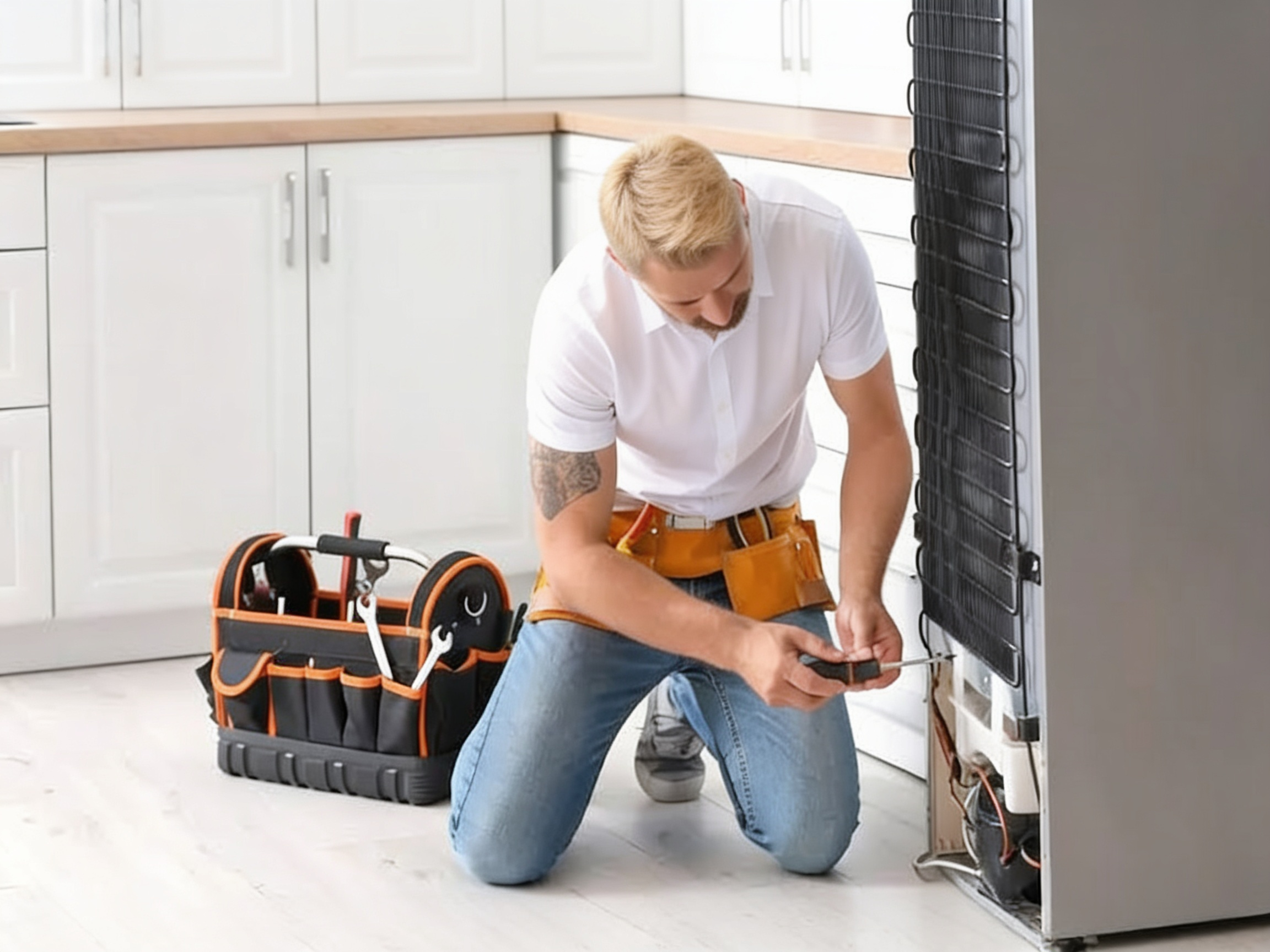
A fridge not cooling after moving may simply need more time to settle and reach its operating temperature. However, it can also indicate an incorrect setting, damaged power connection, restricted ventilation or a fault caused or exposed during transport. Selective Fridges provides mobile fridge repairs across Perth when basic post-move checks do not solve the problem.
The Short Version
Keep the fridge upright and follow the manufacturer’s instructions before reconnecting it. Once switched on, confirm it has power, check the temperature controls, allow several hours for cooling and avoid loading it with warm food too soon. If there is no sign of cooling, arrange a professional inspection.
Why Is My Fridge Not Cooling After Moving?
Moving a refrigerator can temporarily affect its operation. The appliance may have been tilted, disconnected for an extended period or exposed to movement that disturbed an existing component.
Common causes include:
- The fridge was switched on too soon after transport
- It has not had enough time to cool
- The power point or plug is not working correctly
- The temperature control was changed during cleaning
- Holiday, showroom or demonstration mode is active
- The doors are not sealing properly
- The appliance is not level
- Internal air vents are blocked
- The water supply line is kinked on a plumbed model
- A connector, fan or control component was affected during moving
- An existing fault became noticeable after restarting
Begin with the simple checks and allow reasonable cooling time before assuming the fridge has been damaged.
How Long Should a Fridge Stand Before You Turn It On?
The correct waiting time depends on the model and how the fridge was transported.
If the appliance remained upright, the manufacturer may specify a relatively short settling period. If it was significantly tilted or laid on its side, it may need to remain upright for much longer before power is restored.
This settling time allows compressor oil and refrigerant to return to their intended positions. Switching the appliance on too soon may place unnecessary strain on the compressor.
Manufacturer recommendations vary. For example, LG Australia advises allowing approximately two hours after unavoidable horizontal transport, while Whirlpool provides longer waiting periods for some appliances and moving situations. Always follow the instructions for the specific make and model rather than relying on one general rule. LG Australia and Whirlpool provide examples of why model-specific guidance matters.
If you do not know how the fridge was transported or cannot locate the instructions, keep it upright and obtain advice before reconnecting it.
How Long Does a Fridge Take to Get Cold After Moving?
A fridge will not reach its operating temperature immediately after it is switched on.
Cooling time depends on:
- The size and design of the appliance
- Its starting temperature
- The room temperature
- The selected settings
- How often the doors are opened
- Whether warm food has been added
- The condition of the cooling system
You may notice cold air within the first few hours, but full temperature stabilisation can take considerably longer. Some manufacturers advise allowing up to 24 hours before assessing complete temperature stability or fully restocking the appliance. Whirlpool’s refrigerator guidance notes that cooling time varies according to the model and surrounding conditions.
Use a fridge thermometer to confirm that the fresh-food compartment has reached approximately 3°C to 4°C and the freezer is around –18°C before relying on it for food storage.
Is the Fridge Receiving Power?
A working interior light or digital display does not always confirm that the complete cooling system is operating normally. However, checking the power supply is still the first practical step.
Check that:
- The plug is inserted securely.
- The power point is switched on.
- The cord was not pinched or damaged during moving.
- The household safety switch has not tripped.
- The controls are switched to a cooling setting.
- No error code is displayed.
Do not use a damaged cord or plug. If there is a burning smell, sparking, visible electrical damage or repeated tripping, switch the fridge off safely and arrange professional assistance.
Avoid using an extension lead unless the manufacturer expressly permits it.
Could the Fridge Be in Holiday or Demonstration Mode?
Some modern refrigerators include holiday, showroom or demonstration modes. These settings may keep the lights and display operating while reducing or disabling normal cooling.
The mode may have been activated accidentally while the appliance was cleaned, handled or restarted.
Check the display for symbols or messages and consult the owner’s manual. The method for turning these functions off varies between brands and models.
If the display appears normal but the compressor and fans do not operate, a technician may need to check the controls.
Has Moving the Fridge Affected the Door Seal?
A fridge that is not level may not close or seal correctly. Containers, shelves or drawers may also have shifted during transport and can prevent a door from closing fully.
Inspect the following:
- Both doors sit evenly against the cabinet
- No shelf, drawer or package obstructs closure
- The seals are clean and undamaged
- There are no visible gaps around the gasket
- The fridge stands firmly without rocking
- The doors were not bent or damaged during handling
Warm air entering through a door gap makes it harder for the appliance to reach and maintain the correct temperature.
Has the Appliance Been Given Enough Ventilation?
Refrigerators release heat into the surrounding area. Pushing the appliance tightly against a wall or enclosing it without the required clearance can restrict heat dissipation.
Check the installation instructions for the recommended space above, behind and beside the fridge. Do not assume that every model requires the same clearance.
Make sure packaging, moving blankets and protective materials have been completely removed. Also check that ventilation openings are not blocked.
Normal Post-Move Cooling or a Possible Fault?
| What you notice | What it may mean |
|---|---|
| Fridge has just been switched on | More cooling time may be needed |
| Lights work but cabinet is still warm | Check settings and allow time to stabilise |
| Display shows an unusual symbol | Holiday or demonstration mode may be active |
| Fridge rocks or door sits unevenly | Levelling or alignment may be required |
| Compressor runs but neither section cools | Cooling-system assessment may be needed |
| Freezer cools but fridge remains warm | Internal airflow may be restricted |
| Clicking occurs repeatedly without cooling | Start component or compressor issue is possible |
| Power trips when the fridge starts | Electrical testing is required |
| Water appears after moving | Drain, ice melt or water connection may need checking |
These observations help narrow down the cause, but similar symptoms can result from different faults.
A Five-Minute Check You Can Try
Once the recommended settling period has passed:
- Confirm the fridge is upright and stable.
- Inspect the plug and power cord for visible damage.
- Check that the power point works safely.
- Confirm the cooling controls are switched on.
- Look for holiday, showroom or demonstration mode.
- Check that the doors close completely.
- Move food away from internal air vents.
- Ensure there is adequate external ventilation.
- Note any error code, clicking or unusual noise.
- Place a thermometer inside and monitor the temperature.
Do not repeatedly switch the fridge on and off. Frequent restarting can make diagnosis difficult and may place additional strain on electrical and cooling components.
Technician’s Tip
Before moving a fridge, photograph the temperature settings, shelves, water connections and rear installation area.
These photographs make it easier to restore the appliance correctly. After the move, record when it was switched on and how its temperature changes. This information can help distinguish slow post-move cooling from a genuine fault.
Inside the Workshop
When Selective Fridges investigates a fridge that stopped cooling after moving, the technician does not assume transport damage is responsible.
The diagnostic process may include checking the power supply, control settings, sensors, fans, compressor operation, airflow and cabinet temperatures. The appliance may already have had a developing fault that became apparent only after it was disconnected and restarted.
A complete assessment helps identify the actual cause before replacement parts are considered.
A Common Repair We See
One common situation involves a fridge that appears to be operating because the light and display are on, but the cabinet remains warm.
Sometimes, the problem is an incorrect operating mode or a control setting changed during cleaning. In other cases, repeated clicking or a lack of airflow indicates that a component requires testing.
Checking the simple possibilities first can prevent an unnecessary call-out, while prompt attention to persistent symptoms can help protect the food inside.
What We Found This Week
The timeline often provides the most useful clue.
A fridge that has only been running for an hour is different from one that has operated overnight without any measurable temperature drop. Likewise, a model transported upright presents a different situation from one carried horizontally for an extended journey.
Knowing how the fridge was moved, how long it stood upright and when cooling was first noticed gives the technician valuable diagnostic information.
Before You Call for a Repair
Have the following details ready:
- The fridge make and model
- How it was transported
- Whether it was laid down or heavily tilted
- How long it stood upright before connection
- When it was switched on
- Current fridge and freezer temperatures
- Any error codes or unusual noises
- Whether the lights and display work
- Whether either compartment is cooling
- Whether the water connection was disturbed
Keep the doors closed as much as possible while monitoring the temperature.
Move perishable food to another working refrigerator or a properly chilled insulated container if the fridge cannot maintain a safe temperature.
When Should You Book a Fridge Repair?
Arrange a professional assessment when:
- There is no measurable cooling after sufficient operating time
- The compressor repeatedly clicks without starting
- Neither compartment becomes cold
- The freezer cools but the fridge remains warm
- An error code does not clear
- The appliance repeatedly trips the power
- The cord, plug or cabinet was damaged during moving
- Unusual scraping, buzzing or rattling continues
- Water leaks from a connection or beneath the appliance
- The fridge does not respond to its controls
Do not remove electrical panels or attempt sealed-system repairs. These areas should be assessed by an experienced technician.
Mobile Fridge Repairs Across Perth
If your fridge is not cooling after moving and the safe checks have not solved the problem, Selective Fridges can come to you.
The mobile team repairs household refrigerators throughout the Perth metropolitan area. A technician can inspect the appliance in its installed position, test its operation and explain whether it needs more setup attention or a professional repair.
Contact Selective Fridges to arrange an assessment and restore reliable cooling as soon as possible.
Frequently Asked Questions
How long should I wait before turning on a fridge after moving?
The correct waiting time depends on the fridge model and whether it remained upright or was laid down. Follow the manufacturer’s instructions. A fridge transported horizontally generally requires a longer upright settling period.
How long does a fridge take to get cold after moving?
Cold air may become noticeable within several hours, but complete temperature stabilisation can take much longer. Use a thermometer and allow up to 24 hours where recommended by the manufacturer.
Why does my fridge have power but no cooling after moving?
The fridge may need more time, have an incorrect control setting or be in holiday or demonstration mode. A fan, start component, compressor or cooling-system fault is also possible.
Can moving a fridge damage the compressor?
Improper handling or switching the fridge on too soon after horizontal transport can place strain on the compressor. However, a lack of cooling after moving does not automatically mean the compressor is damaged.
Is a fridge not cooling after moving worth repairing?
Repair may be worthwhile when the fridge is otherwise in good condition and the fault involves a replaceable control, fan, start component or connection. Professional diagnosis is recommended before deciding whether to repair or replace it.