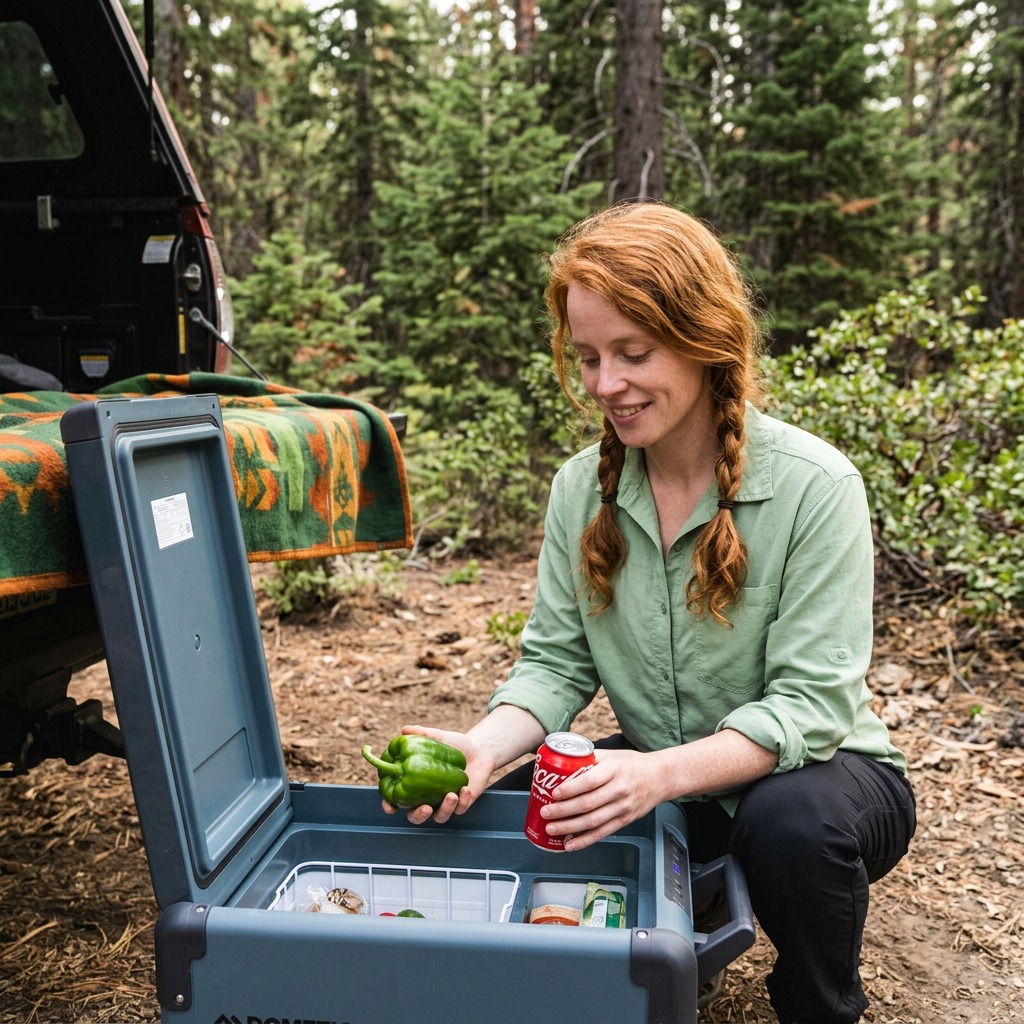
Knowing how to pack a camping fridge starts before you load the car. Pre-cool the appliance, pack already chilled food in sealed containers, organise meals for easy access and follow your model’s loading instructions. For Perth families preparing for WA summer holidays, Selective Fridges recommends checking that the fridge holds its required temperature before departure.
A tidy fridge makes roadside lunches easier. More importantly, it helps you avoid leaving the lid open while searching for something buried beneath three days of supplies.
Chill the fridge and food before loading, separate raw food from ready-to-eat items, and pack meals in the order you will use them. Keep any internal vents clear and leave external ventilation unobstructed. Check temperatures with a suitable thermometer and investigate unreliable cooling before leaving Perth.
How to Pack a Camping Fridge Without Overloading It
Start with a meal plan for the time between reliable shopping stops. Packing every possible ingredient “just in case” can leave you with crushed containers, awkward access and a lid that does not close properly.
Measure your usable space with the baskets and dividers installed. These can help keep food organised and may form part of the intended loading arrangement.
Choose containers that fit the compartment rather than forcing the compartment to fit your largest kitchen containers. Remove unnecessary outer packaging while retaining product identification, storage instructions and use-by dates.
Avoid a universal rule that the fridge must be completely full or mostly empty. Portable fridge designs differ. Follow the manual for loading limits and internal airflow, especially where the appliance has fans or marked air outlets.
Should You Chill the Fridge and Food Before Loading?
Yes. Cool the appliance before loading, and transfer refrigerated food while it is still cold. A warm fridge filled with warm groceries has a different task from a cold fridge maintaining already chilled supplies.
Use a power supply approved for the appliance and allow enough time to reach the intended temperature. Check your manual rather than assuming every model needs the same number of hours.
Dometic’s portable-fridge guidance supports pre-cooling before loading. The useful principle is preparation, rather than a particular brand or accessory.
Bring cold shopping home in suitable insulated storage and refrigerate it promptly. Load the camping fridge near departure instead of leaving food on the driveway while the rest of the vehicle is packed.
Where Should Meat, Dairy and Lunch Supplies Go?
Keep raw food contained
Pack raw meat and seafood in sealed, leakproof containers, separated from ready-to-eat food. Position them so leaks cannot contaminate other supplies.
A reusable bag can help organise food, but it should not be your only protection against leaking meat juices. Check lids and seals before loading.
Make the next meal easy to reach
Group lunch ingredients, breakfast supplies and snacks so you can retrieve what you need quickly. A small labelled container is often easier to handle than several loose packets.
Keep frequently used items accessible without placing them where the lid will compress them. Plan what you will remove before opening the fridge.
Respect different storage needs
A dual-zone fridge may let you separate refrigerated and frozen food, depending on its design. Confirm that each zone supports the required setting and check both compartments.
Do not assume food is frozen simply because it sits beside a frozen item. Follow the product’s storage requirements and monitor the compartment being used.
Should Drinks Share the Same Fridge as Food?
They can, provided the fridge has enough suitable storage space and maintains the required food temperature. The practical problem is repeated access when everyone wants a drink.
Consider keeping a small supply of drinks readily accessible and replenishing it sensibly. If using a separate drinks cooler, keep it hygienic and avoid transferring food into storage that cannot maintain its required temperature.
Put already chilled drinks into the food fridge where possible. Adding a large batch of warm bottles immediately before lunch creates an extra cooling load.
The best arrangement depends on your equipment and itinerary. You do not need to buy another fridge to organise the one you have more effectively.
Better Packing Choices for Summer Travel
| Packing choice | Potential problem | More practical approach |
|---|---|---|
| Loose raw meat packets above lunch supplies | Leaks can contaminate ready-to-eat food | Use sealed, leakproof containment and separation |
| Several oversized containers | Wasted space and difficult access | Use appropriately sized meal portions |
| Snacks beneath the whole load | Longer searches with the lid open | Group frequently used food within reach |
| Bags pressed against external vents | Restricted heat rejection | Keep the manufacturer’s ventilation space clear |
| Warm groceries loaded at departure | Extra cooling demand | Load already chilled supplies |
What Temperature Should You Check?
Keep potentially hazardous refrigerated food at 5°C or colder. Food Standards Australia New Zealand explains the importance of keeping food at the right temperature.
A display reading is useful, but understand what your particular display measures. It may represent a sensor reading rather than the temperature of every item.
Use a suitable thermometer to monitor storage conditions. If you suspect food has warmed, assess its temperature history and follow appropriate food-safety guidance. Smell and taste cannot confirm that food is safe.
Set the appliance appropriately for the food and model. Choosing the coldest possible setting is not a substitute for checking whether the packed fridge performs reliably.
A Simple Loading Routine Before You Leave Perth
1. Plan and portion
Write a short meal list and check where you can restock. Portion supplies into practical containers without losing essential labels.
2. Cool and check
Pre-cool the fridge on an approved supply. Confirm it reaches the required temperature before loading perishable food.
3. Pack for safe access
Separate raw and ready-to-eat food. Make the next meal easy to retrieve and keep model-specific airflow paths clear.
4. Check the installed setup
Close the lid properly, secure the fridge as instructed and check that luggage does not obstruct external vents. Inspect again after the final bags go in.
5. Monitor before departure
Run the loaded setup under normal, safe operating conditions while you still have time to act on problems. Note alarms, unexpected shutdowns or temperatures that do not stabilise.
When Should You Arrange a Fridge Assessment?
Packing changes will not resolve every cooling problem. Persistent poor cooling, damaged seals, unusual noises or repeat shutdowns deserve attention before a long trip.
For broader preparation, read what to check before your next off-grid escape.
Contact Selective Fridges in Perth with the make, model, symptoms and power source used. Arranging an assessment before departure gives you more time to deal with an appliance fault, rather than discovering it at your first campsite.
Frequently Asked Questions
Should I pack food into a warm camping fridge?
Pre-cool the fridge and load already chilled food. Confirm the appliance has reached the required temperature before relying on it for perishable supplies.
Can I fill a camping fridge right to the top?
Follow the manufacturer’s loading instructions. The lid must close properly, and any internal vents or required airflow paths must remain clear.
What temperature should camping food be kept at?
Potentially hazardous refrigerated food should be kept at 5°C or colder. Follow individual food storage instructions and use a suitable thermometer.
Can better packing fix a camping fridge that is not cooling?
Better organisation can address loading problems, but it cannot repair a faulty appliance. Arrange assessment if cooling remains unreliable after appropriate loading and setup checks.